



Maurice Ronet
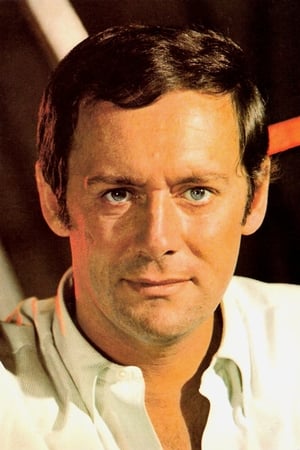
Maurice Ronet (13 April 1927 – 14 March 1983) was a French film actor, director, and writer. Maurice Ronet was born Maurice Julien Marie Robinet in Nice, Alpes Maritimes. He was the only child of professional stage actors Émile Robinet and Gilberte Dubreuil. He made his stage debut at the age of 14 alongside his parents in Sacha Guitry's Deux couverts in Lausanne. After attending the Parisian acting school Centre du Spectacle de la Rue-Blanche, he entered the Paris Conservatoire in 1944, where Jean-Louis Barrault was one of his mentors. When he made his film debut at 22 in Jacques Becker's Rendez-vous de juillet (1949) in a role that was written specifically for him by Becker, he had little interest in pursuing an acting career. After completing the film, he married Maria Pacôme (a French stage actress and playwright), and they departed to Moustiers-Sainte-Marie in Provence, where he tried his hand at ceramics. After completing his military service, he returned to Paris in the early 1950s where he took courses in philosophy and physics, and pursued his passion for literature, music (piano and organ), film and painting. His artwork, part of the peinture non figurative movement, was exhibited with friends Jean Dubuffet and Georges Mathieu. He also acted occasionally in small roles in the films of French directors like Yves Ciampi and René Wheeler, with ambitions of becoming a filmmaker himself. Gradually, however, he came to discover a freedom in acting and a creative satisfaction that provided a synthesis of all his interests. Maurice Ronet became one of European cinema's more prolific actors. Between 1955 and 1975 he appeared in over 60 films. He often portrayed characters who were in conflict with themselves or society. He first garnered acclaim at the 1953 Cannes Film Festival for a supporting role in Jean Dreville's Endless Horizons (Horizons sans fin) and over the next few years as the romantic lead in André Michel's La sorcière (The Blonde Witch/The Sorceress, 1956) and in Jules Dassin's He Who Must Die (Celui qui doit mourir, 1957). It was at the presentation of "La Sorcière" at Cannes where he met a creative and an intellectual counterpart in Louis Malle. Two years later, he made his international box-office breakthrough as Julien Tavernier in Malle's first feature film Elevator to the Gallows (Ascenseur pour l'échafaud 1958), which features Jeanne Moreau. He originated the role of Philippe Greenleaf in Purple Noon (Plein soleil, 1960), René Clément's adaptation of The Talented Mr. Ripley. ... Source: Article "Maurice Ronet" from Wikipedia in English, licensed under CC-BY-SA.
Acting
2021
Self (archive footage)
2013
(archive footage)
2005
Self (archive footage)
1982
Roger Massina
1982
Henri
1981
Charly
1981
Yvon Mageot
1979
Charles Martin
1978
Charles Bais
1977
Philippe Dubaye
1977
Pierre
1976
Unknown
1974
Robert Lucas
1974
Mathieu
1974
Inspector Briac
1974
Vittorio Cazzaniga
1973
Jean Gerfaud
1973
Diserens
1973
Piere Gonzague
1973
Giuseppe Lagana
1972
Fabrizio Garces
1972
Self
1972
Marc Fontemps
1971
L'homme de l'organisation
1971
Raphaël de Lorris
1971
1971
Self
1970
1970
Léon Delmont
1970
Garal
1970
Commissario
1969
Jérôme
1969
François
1969
Harry
1969
Victor Pegala
1968
Rainier
1968
Phillipe
1968
Lotario
1967
Carlo
1967
1967
Paul Wagner
1966
Pierre, comte de Damville
1966
Capain. Boisfeuras
1965
François Combe
1965
Nicolas
1964
Henri
1964
Ferrier
1963
French Lieutenant
1963
Alain Leroy
1963
Maurice Desjardins
1963
Dr. Gérard Rinaldi
1963
Walter Saccard
1962
Michel Jussieu
1962
Michel
1960
Philippe Greenleaf
1959
1959
Henri Messardier
1959
Self
1958
Jacques
1958
Julien Tavernier
1957
Michelis
1956
Laurent Brulard
1956
Self
1955
Christophe de Conti
1954
Vincenzo Bellini
1954
Miguel Murillo
1953
Perotto
1953
Mickey
1953
Marc Caussade
1952
The priest (segment "La Luxure")
1951
François
Directing
Writing
1965
Screenplay
Infos
Maurice Ronet
Male
4/13/1927
3/14/1983
Maurice Julien Marie Robinet
Морис Роне