






Mission: Impossible II(2000)
Expect the impossible again.
Imdb
6.10
415K VotesTmdb
6.14
7.6K VotesViewings
No viewings yet. Add one to start tracking.
With computer genius Luther Stickell at his side and a beautiful thief on his mind, agent Ethan Hunt races across Australia and Spain to stop a former IMF agent from unleashing a genetically engineered biological weapon called Chimera. This mission, should Hunt choose to accept it, plunges him into the center of an international crisis of terrifying magnitude.
Where to watch

Infos
Runtime
123 minutes
123 minutes
Directed by
John Woo
John Woo
Written by
Robert Towne
Robert Towne
People Interested
7
7
People Finished
184
184
Release Status
Finished
Finished
Release Date
5/24/2000
5/24/2000
Original Language
English
English
Origin Country
United States
Cast
Recommended Titles
Reviews
aleks-predator
10 months ago
9
Another “Mission”
The successful 1996 blockbuster "Mission: Impossible" could not remain without a continuation. I’d even say the film was destined for a sequel. And the producers — namely the leading star Tom Cruise and Paula Wagner — decided to create one. However, they wanted to present the new story from a different angle, change the tone of the narrative, while keeping the on-screen tension at the same level as the first film — and naturally surpass it in some ways.
The new director chosen was John Woo. The famous Chinese filmmaker was already well known for a number of movies, the most notable being Face/Off, Hard Target, and later Paycheck and the two-part epic Red Cliff. Woo deserves credit: he delivered stunning visuals, of course with the help of cinematographer Jeffrey L. Kimball. The whole film feels as though it’s painted on canvas. Almost every scene, with its slow-motion effects, lets the audience savor the visual grandeur. This beauty is accompanied by a carefully woven score that sometimes contrasts with the action on screen, evoking the motifs of a warm Spanish evening.
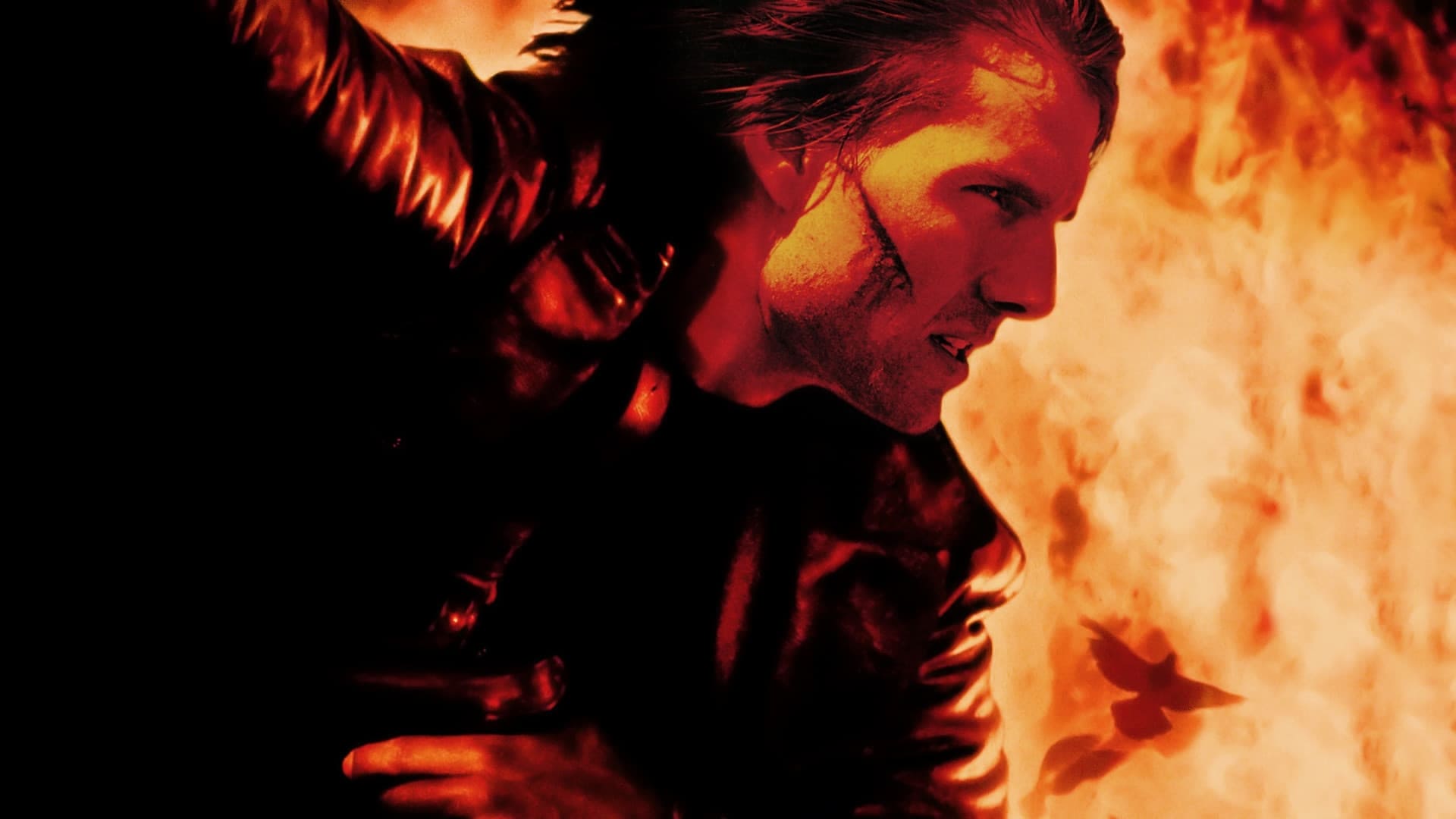
The film differs noticeably from its predecessor. Warmer tones, a suddenly more glamorous main character whose long hair flows in the wind in nearly every frame, a romantic storyline between Cruise’s Ethan Hunt and the heroine played by the enchanting Thandiwe Newton, and breathtaking large-scale locations — all of this is wrapped in the shell of a spy action film. An unusual experiment, but one whose result I personally found very satisfying.
It’s important to note that the defining traits of the franchise didn’t go anywhere — in some places, they were even amplified. I’m talking, of course, about the complex missions for the protagonist and his team. The film abounds in action sequences: chases, fights, stunts, and everything that comes with them. Sometimes you realize it might be worth counting how many moments Ethan should have at least been unable to get back up from, if not outright died. What happens on screen often defies real survival. But this is cinema, and I, for one, am willing to accept it. That’s why you hardly pay attention to things like characters never needing to reload their weapons — the guns just keep firing. Explosions can erupt almost anywhere, regardless of whether their force is at all realistic. And the objects around the characters appear extremely fragile, since they inevitably break apart on impact.
The cast is excellent. Cruise and Newton make a good pair, and it’s genuinely engaging to watch their characters. Additionally, Ethan’s atmospheric teammate Luther Stickell, played by Ving Rhames, joins the team — a great addition to the cast. Anthony Hopkins gives a strong, albeit brief, performance as always. And the villainous duo, played by Dougray Scott and Richard Roxburgh, leave a solid impression. Their Ambrose and Stamp come across as truly dangerous men, eager to play cat-and-mouse with Ethan’s team yet unwilling to accept even a hint of defeat. The film inevitably becomes steeped in masculinity, culminating in a direct showdown between the rivals — and what a showdown it is.
Tom Cruise impresses with his stunts. It’s no longer a secret that he tries to do almost everything himself. I used to wonder how certain scenes were shot — Cruise hanging off cliffs or soaring to extreme heights — because the shots looked so natural, and CGI back then wasn’t advanced enough to explain it. And then I found out the actor really did perform those feats. That certainly deserves respect and attention.
The film walks a fine line between believability and over-the-top spectacle. Woo masterfully maintains the tone, often foregoing traditional calm dialogues between characters. Instead, his heroes converse amid high-tension situations, keeping the audience engaged and the film from dragging. His deft direction ensures the movie never slips into absurdity while remaining exciting throughout.
"Mission: Impossible 2" is a fantastic adventure film, one that certainly has its devoted fanbase. At times too fantastical, it still wins over audiences thanks to quality storytelling, compelling performances, and, of course, the abundance of recognizable franchise trademarks that make it memorable.
9 out of 10