Shepard’s Final War
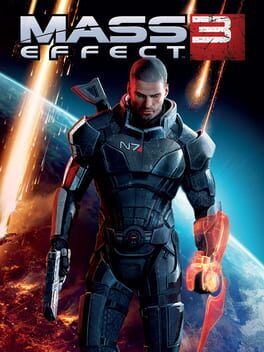
"Mass Effect 3" invites you to put the space armor back on and command entire armies, making you truly feel like a hero holding back the sunset of civilization. This game isn’t just the finale of a trilogy — it’s an emotional culmination where every decision you made before, even years ago in the first and second games, can come back in a way that leaves you staring at the menu thinking, “What have I actually done?”
Let’s start with the main thing: the story. The Reapers, ancient cosmic killers, finally arrive. Not in a vague “someday” sense, but for real — they show up, land, destroy cities, wipe out civilizations. Everything is bad. Commander Shepard, who by this point has already cheated death and defeated countless enemies, once again has to take matters into their own hands. The main goal is to gather every possible force in the galaxy — all races, all fleets, all the power that remains. But of course, no one agrees easily. Everyone has grudges, ancient conflicts, betrayals, and plenty of skeletons in their closets. Shepard isn’t just a soldier here — they’re a diplomat, a peacemaker, sometimes a therapist, and in extreme cases simply the one who can punch through the problem.
The way the narrative is built is especially valuable if you import saves from previous games. Who survived, whom you supported, whom you saved, who died — all of it resurfaces. Your entire history, everything you’ve done, shapes this part of the story. This isn’t just fan service; it’s a real sense of consequences. I once regretted losing someone in Mass Effect 2, and in the third game it came back with such force that I sat in front of the screen scratching my head, thinking, “Well… I deserved that.”
Interestingly, BioWare lets you choose your playstyle right from the start. You can play it like an interactive movie: easy combat, focus on story and dialogue. Or you can go the other way — more shooting, less talking. Or you can choose the classic balanced approach, with both dialogue and combat evenly weighted. This approach is a real gift: whether you value atmosphere or action more, there’s room for everyone.
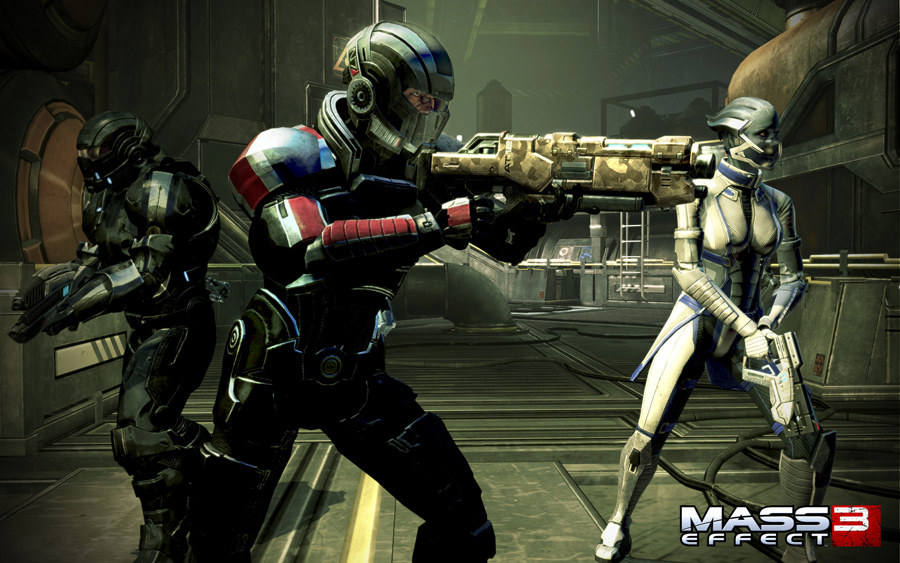
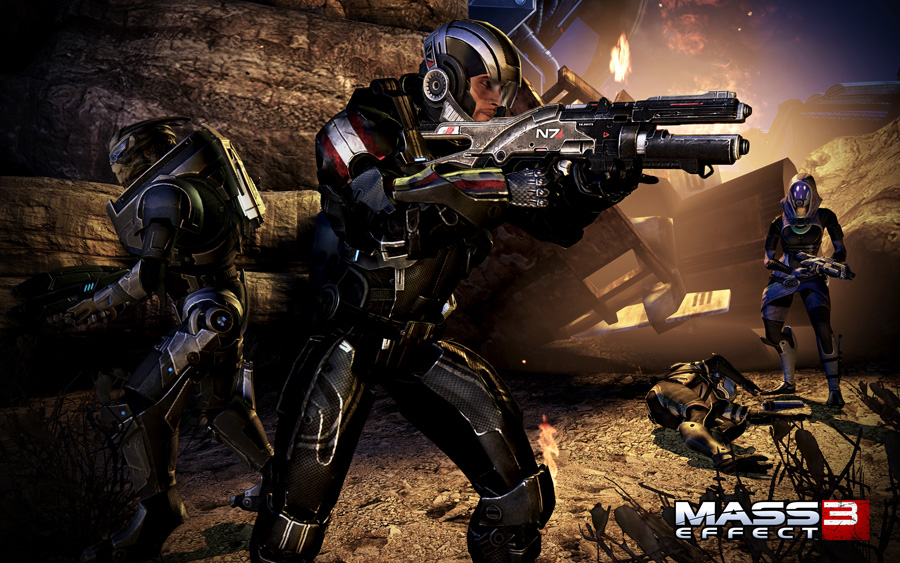
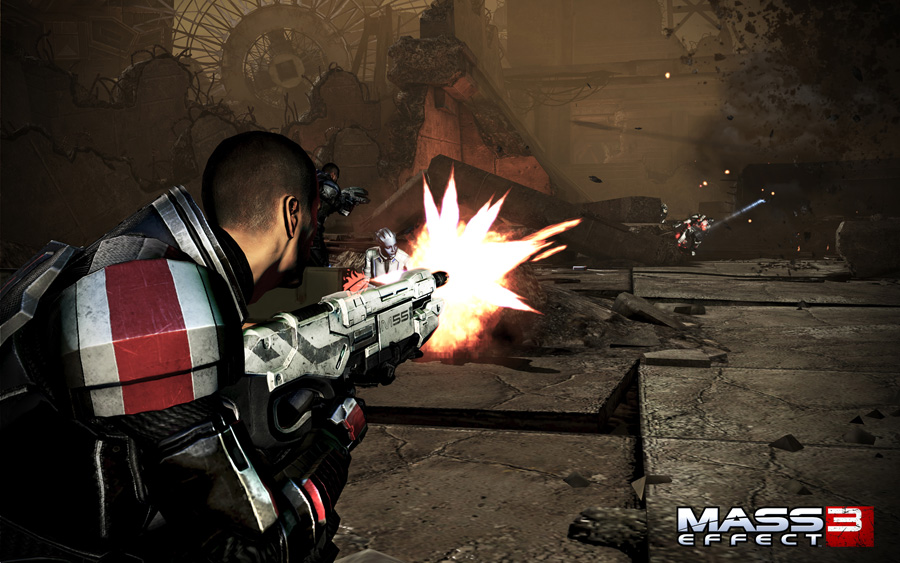
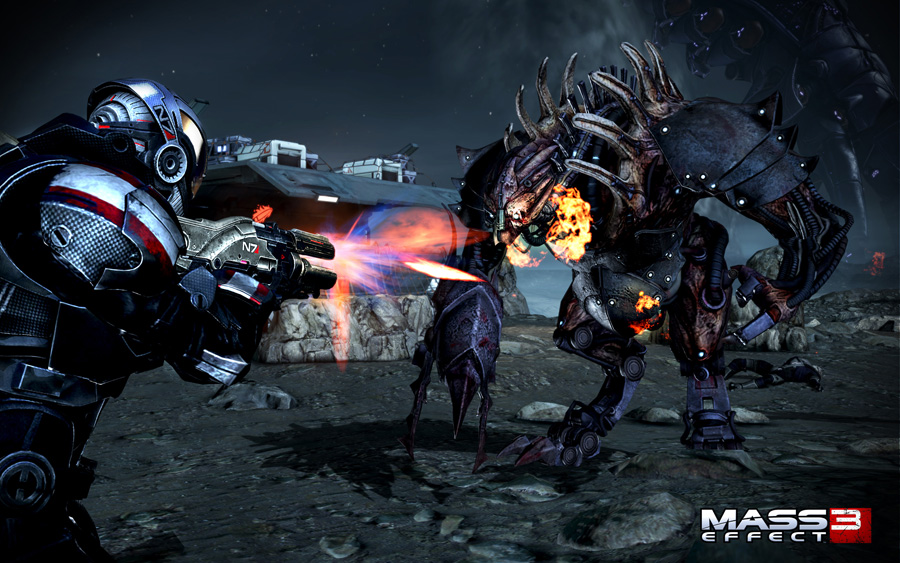
Now about the gameplay. Combat has become more dynamic. Shepard can now dodge-roll and move more freely in different directions. This noticeably changes how firefights feel: it’s easier to move between cover, avoid grenades, and flank enemies. It’s a pleasant mechanic — not revolutionary, but very welcome.
Weapons are customizable, abilities can be upgraded, and your choice of class (soldier, engineer, biotic, etc.) genuinely affects how you approach combat. All of this matters at different points in the story.
Missions once again shine thanks to their variety, memorable locations, and strong visuals. There’s a mission where you carefully maneuver in open space — you literally magnetize to the surface of a wrecked ship and walk along its hull. The atmosphere is so strong you feel like a hero in a space documentary. There’s another mission where you rush through elevators, jump between moving platforms, and neutralize enemy hordes as if you’re in a Tom Cruise action movie.
There’s also a truly stunning segment where you enter the virtual space of the geth — an artificial intelligence race of synthetics. Everything is stylized like a digital environment, with different logic and visuals: bright, distinctive, and beautifully designed. This kind of mission variety really keeps the experience fresh.
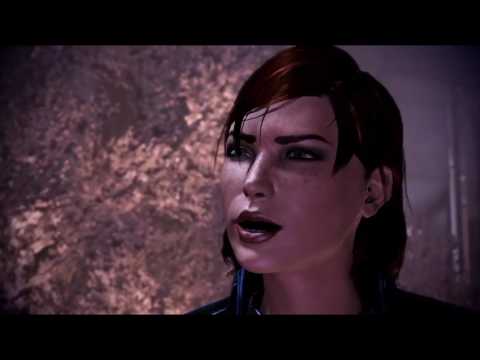
Visually, the game has improved: character models are more detailed, lighting and shadows work better, and cutscenes remain highly cinematic. The planetary scenes are especially impressive — whether it’s the massive city under a vivid sky on the Citadel, the monolithic cruiser Normandy drifting through the vacuum of space, or that unforgettable moment on Thessia, the homeworld of the asari. That mission is impossible to forget. The planet is falling apart, the enemy is winning, and you lose the battle. Everything — the music, the dialogue, the faces — conveys true tragedy, and the game isn’t afraid to show that sometimes saving everyone is simply impossible. Or take the prologue, where the Reapers attack Earth and land on the planet. At the end of the mission, Shepard is forced to leave — unwillingly — watching their homeworld burn as an incredible piece of music plays in the background, both heartbreaking and inspiring for what lies ahead.
Still, "Mass Effect 3" isn’t just about war — it’s also about choice. Not everything is black and white. You’ll have to decide who deserves to live, who goes into battle, and who should stay behind. Shepard must choose between friendship and duty, between saving one person and saving millions. These aren’t just plot twists — they’re ethical dilemmas you can’t simply brush aside. Yes, sometimes it feels like different choices lead to similar outcomes, but the emotional weight after each decision is different.
The final act truly stunned me. It’s powerful in terms of the final battle and striking in the variety of possible outcomes. And you know what? No matter which ending you choose, you’ll still be left impressed. Visually, musically, dramatically — it’s an incredibly strong conclusion. Personally, it took me two full days to come down from the emotional impact of the finale of this remarkable trilogy.
The music, by the way, deserves a paragraph of its own. The soundtrack in Mass Effect 3 is pure magic. The melodies are precise and piercing, appearing exactly where the story needs them — when it hurts, when it’s scary, when you feel the sheer scale of the moment. Sometimes it feels like the music itself is a separate character, quietly observing you from the sidelines.
"Mass Effect 3" is an incredibly rich finale to one of the greatest science fiction sagas in gaming. It’s about heroism and defeat, about choice and its cost, about friendship, loyalty, loss, and hope. If you played the first games — you owe it to yourself to finish the trilogy. If you haven’t — start from the beginning. Because Mass Effect isn’t just a game. It’s a story you lived.
9 out of 10