Do we need such a world?
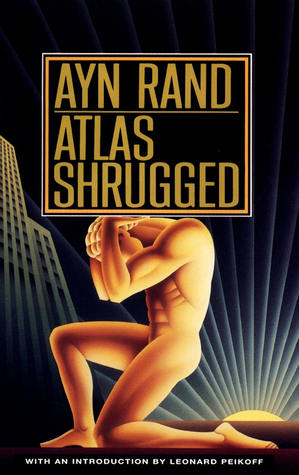
I've heard about Ayn Rand's novel Atlas Shrugged several times, but I decided to read it only after my wife recommended it to me. The work is really big, you get tired of reading it. However, it should be said right away that it is extremely interesting, raises a lot of entertaining topics and will definitely be remembered for its special, unlike anything else fantastic.
It's an iconic book. Probably, more than one generation of Westerners grew up on it, who so honor democracy and the opportunities that the state guarantees them. And so Rand undertakes to show what will happen if society follows the socialist development that Americans hate so much in the first place. Will society benefit from taking money from the rich and giving it to the poor, thereby seemingly improving everyone's living conditions? The answer is unlikely to please readers.
Ayn Rand, who was born in the Russian Empire but later became an American citizen and writer, explores, as I see it, the real world in her work, trying to overlap two opposing societies. This is possible in her work. And Rand is doing great. No wonder she considered "Atlanta" her main work in her literary career.
The main characters of the huge novel Dagny Taggart and Hank Rearden are trying to establish their lives and businesses in an environment where various restrictions are imposed on private enterprises, prescriptions are issued from the state, which are necessary for execution. Such things are akin to sticks in the wheels, besides they divert the vector of development of both the business itself and entire sectors of the economy, which are strategically important for the whole country. The characters, of course, do not like it, they are trying to adapt to the new conditions.
The idea of the novel is to show in this dystopia how the world rests on the shoulders of Atlanteans — people who are the engines of progress, pulling society forward thanks to their individual qualities, exceptional skills to build a high-quality business. And when they try to "equate" such people with others, they simply refuse to create something new. This inevitably leads to the collapse of civilization and its rollback.
The book contains several interesting storylines, a lot of useful and really interesting information about the fictional world of Rand. The writer allows us to see the unusual mixture of American capitalist society with the nascent planned economy, which is being introduced everywhere in the country. All this leads to sad consequences, clearly demonstrating the failure of the socialist model of development of society. The subsequent events in the book are sure to delight fans of not only science fiction and dystopia, but also fans of the detective genre, when the next topic of the work will be the mass disappearances of "business creators."
But still, I especially liked seeing Ayn Rand show parasitism in society. The achievements and efforts of a certain circle of people are devalued, presented in the new society as something common that exists for everyone. With this approach, people lose their sense of competition and desire for new knowledge, discoveries and victories. Why would they do that? After all, they can enjoy what others have achieved without even lifting a finger, without participating in the creation of the wealth of the Atlanteans available to everyone now.
Of course, it is impossible not to notice that the work presents us with an exaggerated world. But that's why it's dystopian — unreal, fantastic. There are many things here that many seasoned readers are unlikely to accept. One can see a kind of propaganda of Western values, the values of individual discoveries, which are so unlike the values of socialism, which was built for many decades in the Soviet Union. But I fully admit that these are echoes of the childhood and youth of the writer, who went to the United States on a student visa and never returned to the new country of the USSR. It is quite possible that the new realities of the former empire did not suit her. She carried them through her life, turning them into a literary work that, no matter what anyone said, became a cult.
To understand the written story for yourself, you need to read "Atlas Shrugged" yourself. This is a deep and interesting work. Huge, yes. Long to read, yes. But in the finale, there will be a rethinking of today's world and perhaps a different view of the entire 20th century.
8 out of 10