

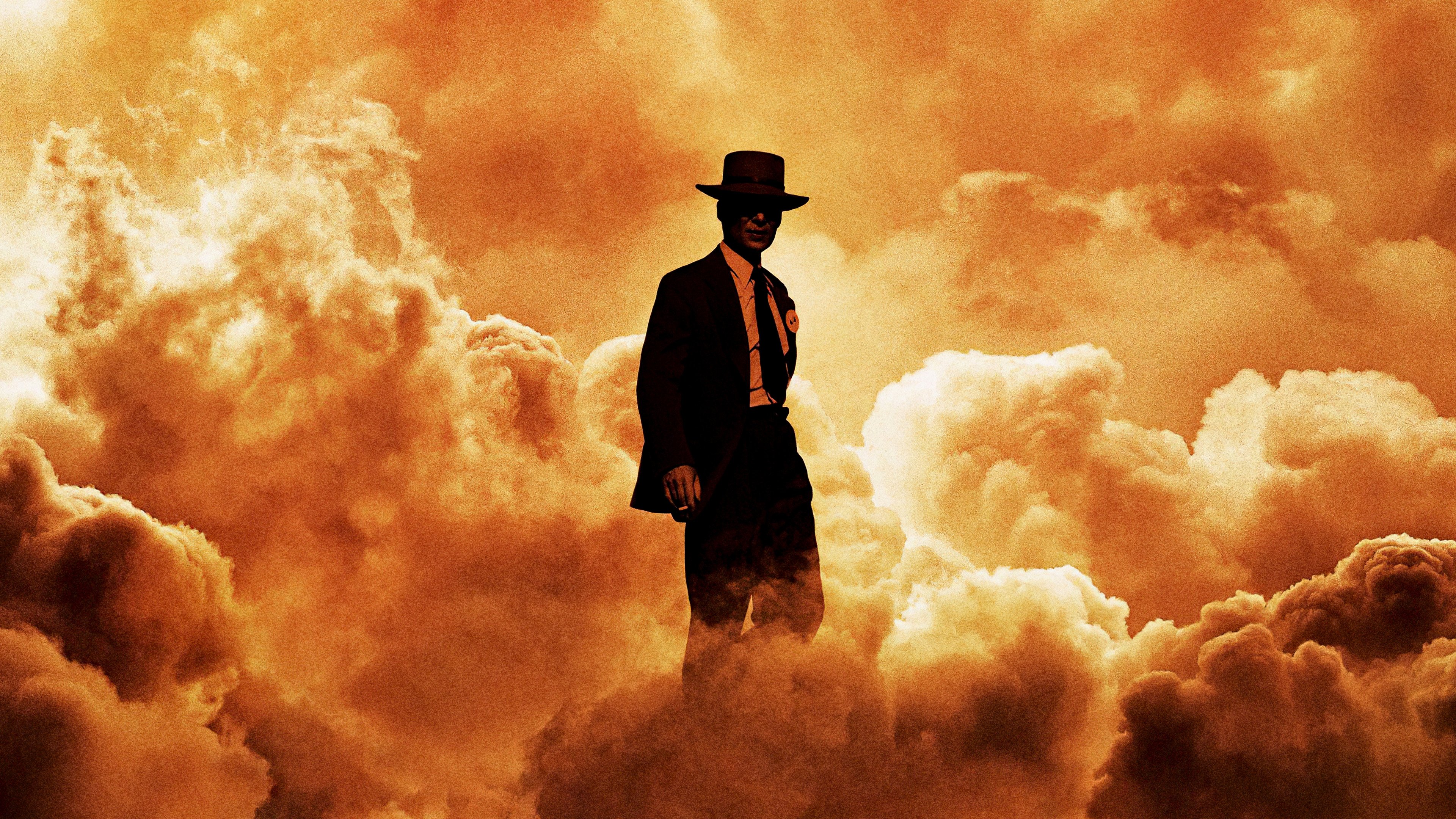









Oppenheimer(2023)
The world forever changes.
Imdb
8.20
1.1M VotesTmdb
8.02
13K VotesViewings
No viewings yet. Add one to start tracking.
The story of J. Robert Oppenheimer's role in the development of the atomic bomb during World War II.
Where to watch

Infos
Runtime
181 minutes
181 minutes
Directed by
Christopher Nolan
Christopher Nolan
Written by
People Interested
53
53
People Finished
361
361
Release Status
Finished
Finished
Release Date
7/19/2023
7/19/2023
Original Language
English
English
Origin Country
United Kingdom
United States
Cast
Related Titles
Recommended Titles
Reviews
aleks-predator
5 months ago
8
Now I Am Become Death, the Destroyer of Worlds
"Oppenheimer" truly did become the defining film of 2023. Several factors converged: the undeniably fascinating figure of the father of the atomic bomb, the Manhattan Project, a constellation of well-known actors in leading roles and supporting ones — sometimes even tertiary — and of course the celebrated name of the film's director. Over his more than thirty-year career, Christopher Nolan has won the hearts of countless viewers and cinema lovers. His filmography contains both magnificent and divisive works. But one thing is beyond dispute: this biographical picture about Robert Oppenheimer is an unmistakable challenge the director set for himself.
Nolan's project generated interest the moment it was announced that his next film would be a biographical portrait of one of the most famous figures of the twentieth century. I remember thinking at the time that the project didn't quite seem to fit with Nolan's usual work — that of a brilliant visionary and blockbuster strategist. Having now seen "Oppenheimer," I understand that the director was making a deliberate new step in his career. Chris decided to try his hand at a different genre. And in my view, he pulled it off well.
The film spans several decades of the scientist's life, portraying a richly layered existence — his relationships with his wife, his mistress, and many others, among whom the most significant is his dynamic with Lewis Strauss, the chairman of the U.S. Atomic Energy Commission.
The picture differs sharply from Nolan's familiar storytelling mode. Don't expect the enormous scale and grandeur of the IMAX photography he so loves. The film grips you by entirely different means. A large cast of characters, non-linear storytelling, and two narrative arcs — deliberately rendered, as I see it, in color and in black and white. The color arc presents the subjective perspective of the main character, Robert Oppenheimer, tracing his life story as the father of the atomic bomb himself experiences it. The black-and-white arc, devoid of color, aims for an objective view and concentrates on the story of Lewis Strauss. Nolan adds a brisk pace, an enormous volume of dialogue, rapid editing, and an excellent score by Ludwig Göransson.
Nolan's characters are vivid and multidimensional. There are no clear-cut villains or straightforward enemies here — just people who became part of history. They shape it, altering the fate of humanity once and for all, creating a sword of Damocles whose invisible blade hangs over the entire world to this day. What was created so many decades ago — that terrible weapon now taken as a given — was perhaps conceived as a deterrent. But it could just as easily become fatal, descending upon entire peoples without warning.
All of these concerns run like a red thread through the film's narrative. Nolan presents his Oppenheimer as a man haunted in his nightmares by what he himself created. And the great achievement of the screenplay, the direction, and above all the actor Cillian Murphy, who plays Robert, is that taut nerve, that drawn wire, into which Oppenheimer gradually transformed over the years. The film shows how this man suffered from what he gave to the world. Where early on we see him responding to his creation with something unresolved and indeterminate — a weapon that will bring death — by the final act the protagonist has changed, maintaining a composed exterior while harboring within himself a wild pain and waking nightmares, imagining himself become the destroyer of worlds.
The cast is magnificent, a wealth of recognizable names in varied roles. Standing apart alongside Murphy is, of course, Robert Downey Jr. The screenplay positions him as a kind of antagonist — a man of real importance to this story. Perhaps that's the right framing. I didn't find Downey Jr.'s performance extraordinary — he is capable of even better — but he handles the role with considerable skill. Emily Blunt, Florence Pugh, and Matt Damon all deliver strong work.
The film is unquestionably a significant milestone in Cillian Murphy's career. He has appeared in Christopher's films many times, but this is his first leading role — and in my view, he carried it magnificently.
"Oppenheimer" can hardly be counted among Christopher Nolan's very best work. The director has far stronger films to his name — "Interstellar," "Inception," the Dark Knight trilogy, "The Prestige," and others. But this film is a message to the world: that we all live in a dangerous time, one that demands we reconsider a world order in which global threats are real. The film is prepared to deliver a sharp slap to jolt people awake and make them consider where we are actually being led, and where we will ultimately end up. It also demonstrates how powerfully an auteur's name can work in their favor — Nolan's personal filmmaking proved compelling enough to draw in a mass audience. The film passes no verdict on what it shows. That is an excellent choice on Nolan's part. The viewer must do their own thinking after the credits roll — deciding who is who in this story, and above all, what those events have ultimately brought us to.
The picture asserts that the creation of atomic weapons was conceived as something that would put an end to war once and for all. Perhaps. Perhaps not. The true motives of those who transformed atomic energy into a weapon of destruction we will never know for certain. But even assuming the best of intentions, our present reality makes it abundantly clear that achieving lasting world peace is not working. And may never work.
8 out of 10