


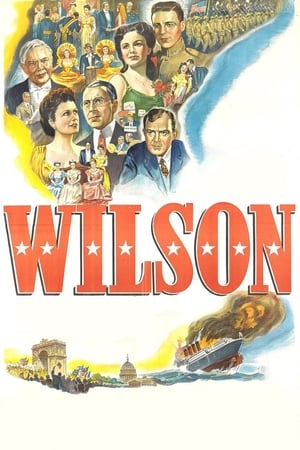



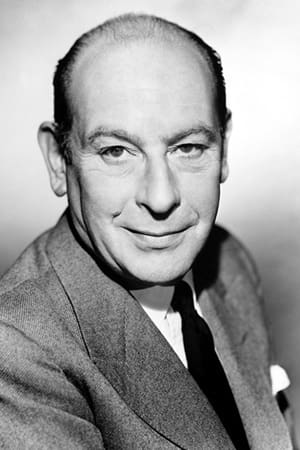
Wilson(1944)
DRAMA AND SPECTACLE UNPARALLELED! ENTERTAINMENT UNDREAMED OF! 12,000 PLAYERS! 200 MIGHTY SCENES! TOLD TO THE TUNE OF 87 BELOVED SONGS!
Imdb
6.30
1.9K VotesTmdb
5.60
26 VotesViewings
No viewings yet. Add one to start tracking.
The political career of Woodrow Wilson is chronicled, beginning with his decision to leave his post at Princeton to run for Governor of New Jersey, and his subsequent ascent to the Presidency of the United States. During his terms in office, Wilson must deal with the death of his first wife, the onslaught of German hostilities leading to American involvement in the Great War, and his own country's reticence to join the League of Nations. Preserved by the Academy Film Archive in partnership with Twentieth Century Fox Film Corporation in 2006.
Where to watch

Infos
Runtime
154 minutes
154 minutes
Directed by
Henry King
Henry King
Written by
People Finished
1
1
Release Status
Finished
Finished
Release Date
8/1/1944
8/1/1944
Original Language
English
English
Origin Country
United States
Cast
Recommended Titles
Reviews
aleks-predator
about 2 months ago
5
The Story of Woodrow Wilson on the Big Screen
I decided to watch the 1944 film "Wilson" because of its Oscar count — the picture took home five of them. It was recognized for editing, sound, original screenplay, cinematography, and art direction. The major prizes eluded it, but for anyone with an interest in American history, it's a worthwhile watch. If only the once.
The film tells the life story of the 28th President of the United States, Woodrow Wilson. It was directed by Henry King, and what emerged is a biographical drama typical of its era: solid, dry in places, with an emphasis on a respectful tone and the idealization of its subject. Exactly what you'd expect from the 1940s — a period when cinema was not only an art form but also part of an ideological apparatus, especially during the years of the Second World War.
The lead role was played by Alexander Knox, who gave it his full commitment. You can see the effort to inhabit the character — presenting Wilson not so much as a politician but as a man with his own convictions, emotions, and inner life. The trouble is that the overall delivery comes across as rather even-keeled: no vivid outbursts, no attempt to dig deeper into the personality. Everything is kept in the spirit of noble seriousness, which makes the film feel overly polished. At times it borders on an illustrated lecture.
That said, it's worth remembering when the film was made. In 1944 America was at war, and it's no surprise that "Wilson" carries a patriotic undercurrent. This is less a portrait of a person than a model to emulate — the philosopher-president, the thinker-president. I wouldn't be surprised if that was precisely the intention: to bolster the morale of audiences during a difficult time.
The screenplay covers the key milestones: Wilson's political career, America's entry into the First World War, and his attempt to establish the League of Nations. It's all sequential and logical, but a little academic. For my part, I found myself wanting more vitality and emotional engagement. The filmmakers seem to have been more concerned with underlining the significance of events than with drawing the viewer into the human story.
Technically, however, the film is genuinely well crafted. The costumes, makeup, and period atmosphere are all at a high level for their time. Much of it looks archaic today, of course, but for the 1940s it's impressive work — and you can see why the Academy was generous with its awards.
To sum up: "Wilson" is a film that registers more as a cinematic document of its era than as compelling drama. It makes no attempt to surprise or to entertain. It is serious, unhurried, and perhaps a little dry. Personally, it earned my respect without quite engaging me. Still, it was interesting to watch — if nothing else, for the general education and historical context it provides.
5 out of 10