

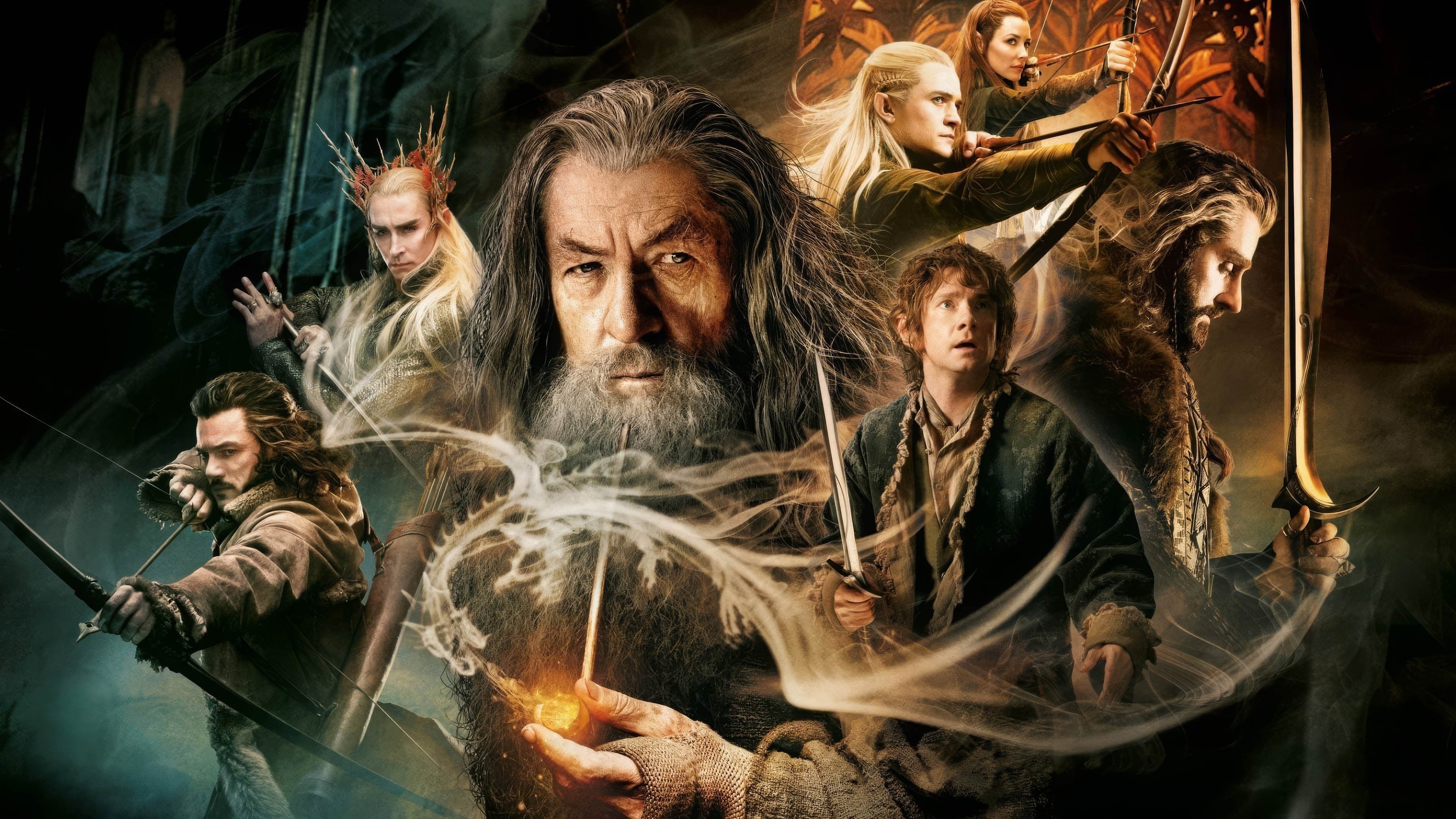



The Hobbit: The Desolation of Smaug(2013)
Beyond darkness... beyond desolation... lies the greatest danger of all.
Imdb
7.80
762K VotesTmdb
7.58
15K VotesViewings
No viewings yet. Add one to start tracking.
The Dwarves, Bilbo and Gandalf have successfully escaped the Misty Mountains, and Bilbo has gained the One Ring. They all continue their journey to get their gold back from the Dragon, Smaug.
Where to watch

Infos
Runtime
161 minutes
161 minutes
Directed by
Peter Jackson
Peter Jackson
People Interested
16
16
People Finished
264
264
Release Status
Finished
Finished
Release Date
12/11/2013
12/11/2013
Original Language
English
English
Origin Country
New Zealand
United States
Cast
Recommended Titles
Reviews
aleks-predator
2 months ago
8
A Journey into a World of Dragons and Adventure
The second "Hobbit" film is exactly the kind of sequel a great franchise deserves: bigger, more spectacular, and far more eventful. The tension rises considerably, the stakes become higher, and the visuals are even more breathtaking. The story confidently builds on everything established in the first film while bringing the characters ever closer to their destination—the Lonely Mountain, where unimaginable riches await, along with one rather significant threat known as Smaug.
Bilbo (Martin Freeman), the dwarves, and Thorin (Richard Armitage) continue their perilous journey, encountering more and more figures capable of changing the course of events. New enemies emerge, new allies appear, and magic is never far away. Most importantly, everything is presented with that perfect sense of fairy-tale danger that's impossible to resist. Peter Jackson successfully recreates the formula that made his fantasy films so compelling without sacrificing either spectacle or storytelling.
Smaug deserves special mention. His appearance is the film's true climax, and, honestly, it's the main reason to watch the second installment of the trilogy. Smaug is magnificent—alive, terrifying, and highly intelligent. Benedict Cumberbatch gives the dragon genuine charisma. Even in digital form, this magnificent beast commands attention with nothing more than a glance. Massive, dangerous, and incredibly cunning, Smaug becomes the film's greatest achievement thanks to stunning visual effects, Cumberbatch's outstanding performance (the behind-the-scenes motion-capture footage is fascinating to watch), and his unforgettable voice work. His confrontation with Bilbo is one of the movie's strongest scenes. It's far more than a simple exchange of dialogue—it's a psychological duel. Smaug isn't just a monster; he's a fully realized personality, and you can feel that from the very first moment he appears.
Among the new additions, Tauriel, played by Evangeline Lilly, deserves recognition. Although the character was created specifically for the film and doesn't appear in Tolkien's novel, she fits naturally into the story. Her subplot involving Legolas (Orlando Bloom) and Kíli (Aidan Turner) introduces a welcome touch of romantic drama, something largely absent elsewhere in the film, while also providing moments of relief between the action sequences. Tauriel feels like a complete character with her own convictions and emotions. Through her, the story gains something that Bilbo's and the dwarves' storyline occasionally lacks—a more immediate emotional warmth.
Visually, the film is stunning. Jackson once again goes all out. From the dark forests of Mirkwood to the glittering halls of Erebor, every location is crafted with extraordinary care. The battle scenes are impressively staged, the visual effects still hold up remarkably well, and sequences such as the barrel escape down the river or the assault on the underground fortress remain unforgettable. At times, however, the visual intensity borders on excess. The screen is so packed with color and detail that your eyes can grow tired, and watching the film in one sitting can feel a little exhausting by the finale. Still, that's more a stylistic choice than a genuine flaw.
Jackson's direction remains top-notch. He knows exactly how to hold the audience's attention, creating scenes that captivate not only through their scale but also through their atmosphere. Despite the liberties taken with Tolkien's original story, the film retains the one essential quality that matters most: a genuine sense of adventure.
"The Hobbit: The Desolation of Smaug" is an excellent fantasy film centered around one unforgettable dragon. It's a major step forward on the road to the trilogy's conclusion—a film where spectacular visuals, a rich story, and memorable characters come together. It has its excesses and its questionable decisions, but it's clearly made with passion and deep respect for Tolkien's world.
8 out of 10