

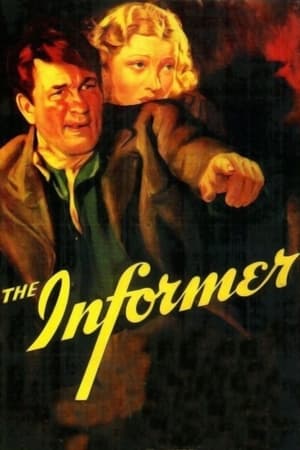


The Informer(1935)
Imdb
7.30
7.8K VotesTmdb
6.80
118 VotesViewings
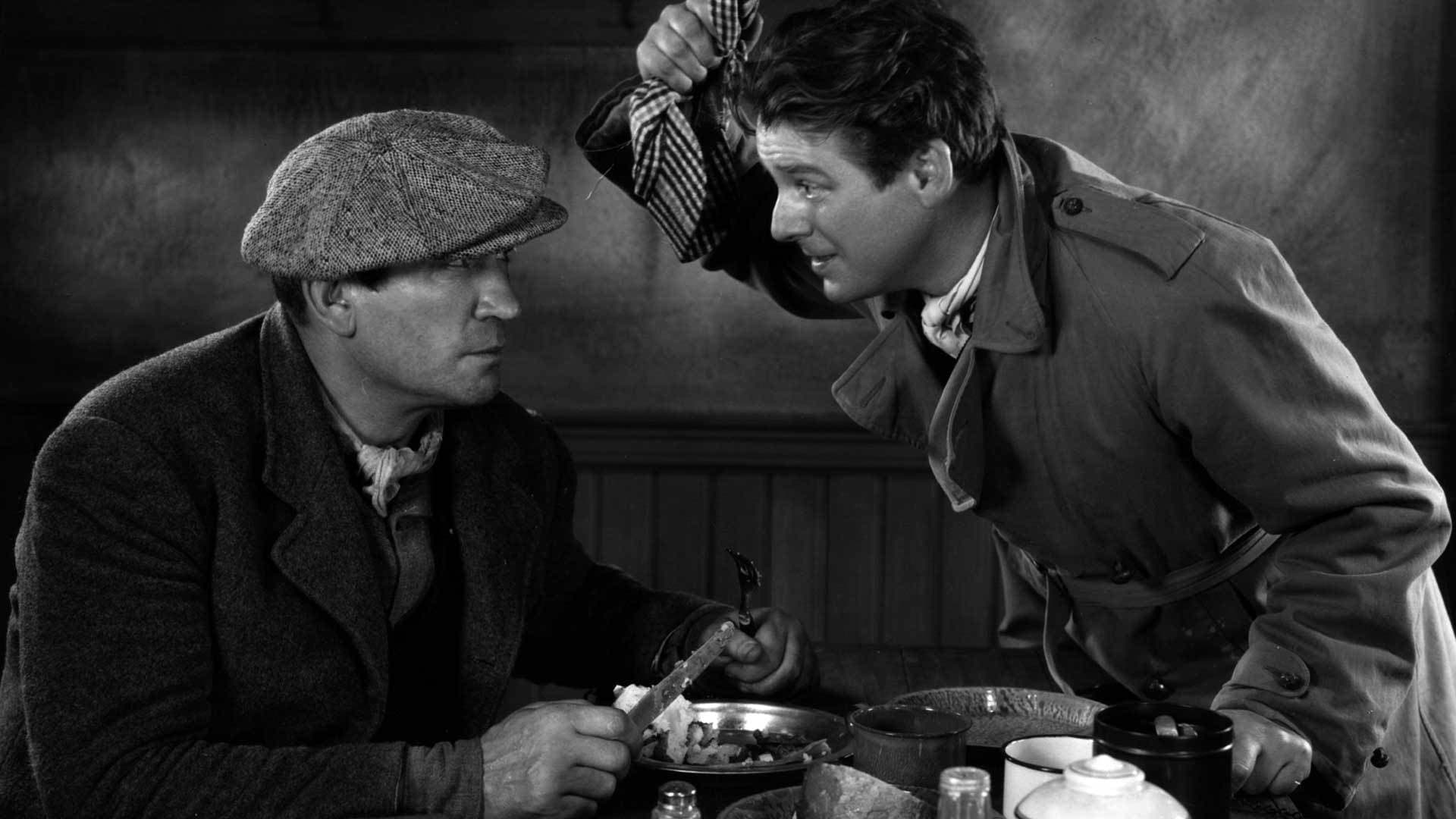
Gypo Nolan is a former Irish Republican Army man who drowns his sorrows in the bottle. He's desperate to escape his bleak Dublin life and start over in America with his girlfriend. So when British authorities advertise a reward for information about his best friend, current IRA member Frankie, Gypo cooperates. Now Gypo can buy two tickets on a boat bound for the States, but can he escape the overwhelming guilt he feels for betraying his buddy?
Infos
Runtime
91 minutes
91 minutes
Directed by
John Ford
John Ford
Written by
Dudley Nichols
Dudley Nichols
People Finished
1
1
Release Status
Finished
Finished
Release Date
5/9/1935
5/9/1935
Original Language
English
English
Origin Country
United States
Cast
Recommended Titles
Reviews
aleks-predator
7 months ago
5
Despair and Its Consequences
The Informer caught my attention because of its four Academy Awards, including Best Actor and Best Director. In fact, it became the big winner of the 1936 Oscars, setting a record at the time. The story itself is fairly engaging: the clash between the Irish and the English authorities, friendship and betrayal, love and despair. The film has a little bit of everything, yet after watching it, I was left disappointed. It didn’t leave much of an impression.
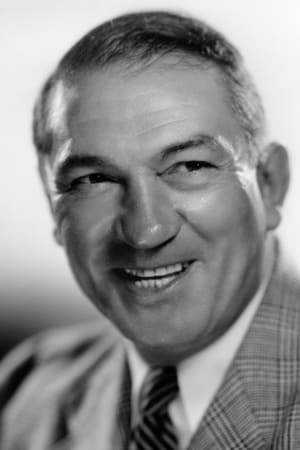
The action takes place in 1922. The actors, the locations — everything reflects that now distant era. At the center of it all is the relationship between the main character Gypo, played by Victor McLaglen (who won the Oscar for this role), and the prostitute Katie, portrayed by Margot Grahame. During one of their arguments, Gypo speaks disparagingly of Katie’s profession, and she retaliates by accusing him of being unable to earn money and sinking into poverty. This conflict forces Gypo to reflect on his place in the world. The events surrounding him weigh heavily on his shoulders, dragging him into despair. The film clearly tries to explore Gypo’s inner life. He is, after all, one of many trapped in a hopeless situation with no strength to escape it. McLaglen makes an effort to uncover his character’s inner struggle, but in my view, he doesn’t fully succeed. At least, the Oscar feels questionable — especially when you consider that his competition included Clark Gable and Charles Laughton for Mutiny on the Bounty, whose performances were far stronger in that film.
As for Best Director, the Oscar went to John Ford. His film is good, but far from outstanding. Here, you can see his attempt to reveal Gypo’s inner world through his actions. Yes, we witness a hidden struggle somewhere deep inside the character’s soul, but for me, the attempt to convey the full spectrum of emotions didn’t quite land. I couldn’t sympathize with the hero, and overall, the film felt rather dull. I believe this lack of emotional depth rests on Ford’s shoulders. Once again, he won over what I felt were more interesting works, such as Frank Lloyd’s Mutiny on the Bounty and solid films like Michael Curtiz’s Captain Blood and Henry Hathaway’s The Lives of a Bengal Lancer.
The story unfolds steadily, and the main character inevitably carries out his plan against his friend. Yes, one could argue that his actions are understandable given the circumstances, or, on the other hand, condemn them, since true friends should never betray one another. But the deed is done, and Gypo is left to carry the weight of his guilt.
The Informer, for me, turned out to be a middling, gray project that left little mark. It doesn’t linger in memory, and its lofty awards don’t quite match what I saw on screen. Some may call it a Hollywood classic, but I won’t be one of them. To me, it’s a film for a single viewing — with a solid premise, but a weak execution.
5 out of 10
Collections
Nothing here
¯\_(ツ)_/¯