






Batman & Robin(1997)
Strength now. Courage always. Family, above all. Batman and Robin!
Imdb
3.80
283K VotesTmdb
4.39
5.4K VotesViewings
No viewings yet. Add one to start tracking.
Batman and his sidekick Robin attempt to the foil the sinister schemes of a deranged set of new villains, most notably the melancholy Mr. Freeze, who wants to make Gotham City into an arctic region, and the sultry Poison Ivy, a botanical femme fatale. As the Dynamic Duo contend with these bad guys, a third hero, Batgirl, joins the ranks of the city's crime-fighters.
Where to watch

Infos
Runtime
125 minutes
125 minutes
Directed by
Joel Schumacher
Joel Schumacher
Written by
People Interested
5
5
People Finished
104
104
Release Status
Finished
Finished
Release Date
6/20/1997
6/20/1997
Original Language
English
English
Origin Country
United States
United Kingdom
Cast
Recommended Titles
Reviews
aleks-predator
about 1 month ago
6
The Flop Everyone Remembers
"Batman & Robin." A film that had everything it needed to be a sensation and a major triumph — the budget, the recognizable actors, the established universe. What came out instead was something incoherent.
Director Joel Schumacher had already worked with Batman and handled the previous installment reasonably well. There he made Gotham brighter, added neon, but the film still stayed within the established lore. Here, though — it's too much. It feels as if the "seriousness" dial was turned to zero and the "madness" dial cranked almost to maximum.
The plot looks promising on paper, but taking the execution seriously is difficult. In places everything looks like a children's amusement ride: a lot of noise, bright colors, and some very strange decisions — from the heroes and the villains alike, and from the filmmakers as a whole. Coming after the dark atmosphere of Tim Burton's films, this feels particularly jarring. Those had style, the right kind of grotesque, their own sense of mystery. Even the previous entry in the series, directed by Schumacher himself, managed to produce a perfectly decent story. This one, however, is practically a carnival.
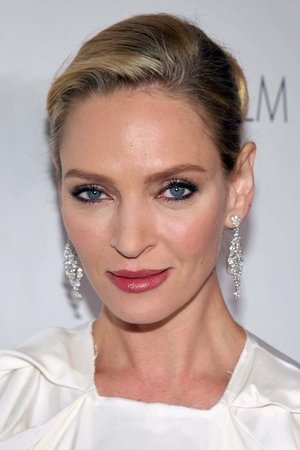
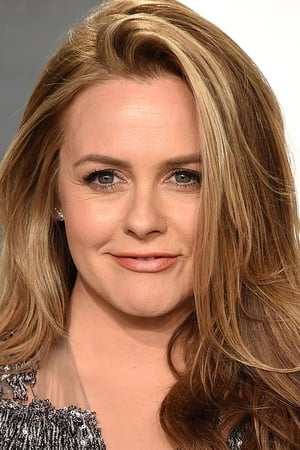
The cast is powerful: George Clooney, Arnold Schwarzenegger, Uma Thurman, Chris O'Donnell, Michael Gough, Alicia Silverstone. But in practice, singling anyone out is difficult — not because they perform poorly, but because there's simply not much to perform. The screenplay reduces everyone to caricatures.
Though one element genuinely resonated: the storyline between Bruce Wayne and Alfred. Alfred Pennyworth has long been far more than a butler to Wayne. He's the man who became family to him. Their scenes together are a rare instance where the film suddenly becomes warm and alive — genuine drama comes through, conveyed effectively in a handful of moments.
Then there's Mr. Freeze. Schwarzenegger gives it his best, and you can tell he's enjoying himself. But the character comes out strangely conceived. On one hand there's the tragedy — the story with his wife Nora. On the other, there are endless puns and a cartoonishness that undermines everything. The result is an antagonist who, by the standards of the Batman universe, should carry real weight, but simply doesn't work — neither as a dramatic figure nor as a serious villain. The potential was enormous.
The costumes, by the way, caused quite a stir in their day. If you've seen the film, you know exactly what that means. If you haven't — prepare yourself. Everything gleams and shimmers and looks maximally strange. This is no longer the comic-book aesthetic; it's more of a variety show. You occasionally catch yourself thinking you're watching not a Batman film, but a parody of one.
And because of all this, the picture comes across as too light. Not even light — frivolous. You don't believe in what's happening, you can't take the characters seriously, and everything feels like a joke stretched across two hours.
In the end, "Batman & Robin" isn't just an unsuccessful installment — it's an object lesson in how to destroy the tone of an entire franchise. The attempt to make things lighter and more fun resulted in the disappearance of the one essential thing: the feeling that you're watching a story about the Dark Knight.
But looking at it more broadly, this failure has its flip side. Perhaps it was precisely experiments like this that made it clear Batman needed a different approach. And not long after, Christopher Nolan stepped in — and everything fell into place, setting the franchise on a new and modern course.
So yes, the film is weak. But it has remained part of history all the same — as a reminder of how not to do it.
6 out of 10