


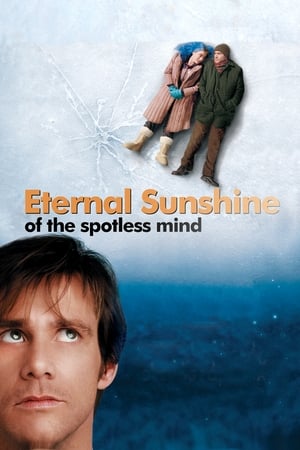













Eternal Sunshine of the Spotless Mind(2004)
You can erase someone from your mind. Getting them out of your heart is another story.
Imdb
8.30
1.2M VotesTmdb
8.09
17K VotesViewings
No viewings yet. Add one to start tracking.
Joel Barish, heartbroken that his girlfriend underwent a procedure to erase him from her memory, decides to do the same. However, as he watches his memories of her fade away, he realises that he still loves her, and may be too late to correct his mistake.
Where to watch

Infos
Runtime
108 minutes
108 minutes
Directed by
Michel Gondry
Michel Gondry
Written by
Charlie Kaufman
Charlie Kaufman
People Interested
36
36
People Watching
1
1
People Finished
207
207
Release Status
Finished
Finished
Release Date
3/19/2004
3/19/2004
Original Language
English
English
Origin Country
United States
Cast
Related Titles
Recommended Titles
Reviews
aleks-predator
6 months ago
6
Shine, But Don’t Get Lost in Your Memories
I never really imagined Jim Carrey and Kate Winslet as an on-screen duo. However, "Eternal Sunshine of the Spotless Mind" proved that it was entirely possible. While Winslet is easily воспринимается as a dramatic actress, Carrey is a more complicated case. It’s hard for him to completely step out of his image as a comedy genius. Still, he reaches for an interesting new height here—and seems to manage it. Not quite on the same level as the film itself, though.
I first watched the movie quite a long time ago and recently decided to revisit it to refresh my memories. It was surprising to rediscover a now very familiar star-studded cast. Alongside Carrey and Winslet, the film features Mark Ruffalo, Kirsten Dunst, Elijah Wood, Tom Wilkinson, and David Cross. But ultimately, what matters most is the story, the direction, and the overall impression—and here my feelings are mixed.
The film begins in a way that leaves the viewer confused at first. That’s part of the design. As you watch, you’re meant to follow the protagonists’ journey, to see the hidden side of their lives, and to gradually understand what happened and how everything led to the ending we see. The storytelling feels somewhat fragmented and occasionally disorienting. At times, it seems like multiple viewings are required for full understanding. For me, however, that’s a significant drawback.
The acting is strong. I understand why Jim Carrey was chosen for the lead role—few others would look so organic as this awkward, emotionally layered character. And although I mentioned that drama is more of an exception in Carrey’s career, here that exception works. He is compelling, impulsive, and memorable. Winslet’s character, on the other hand, can be unsettling with her sudden mood swings. A sweet and occasionally mysterious young woman can abruptly lose control and even seem dangerous. Winslet delivers a solid performance. Still, to be honest, the characters’ stories didn’t resonate with me deeply. I found myself more interested in figuring out what was wrong with this couple than truly empathizing with them.
The supporting cast also performs well, each character carrying their own story. As the plot unfolds, you realize how interconnected everything is. Sometimes such narrative twists work beautifully—but here they feel piled on top of one another, weighing the film down. With every new twist, it starts to seem overly tailored to the film’s needs, as if the screenwriters weren’t too concerned about how tangled the web of intertwined fates became. In that sense, I was even somewhat surprised that the film won the Academy Award for Best Original Screenplay—though, to be fair, in my view the other nominees that year weren’t particularly stronger.
What I truly appreciated was how the film portrays the protagonist’s inner world—what happens inside his mind. The abundance of imaginative and sometimes absurd imagery feels authentic, because anyone’s thoughts and dreams can be just as strange. In this respect, the film struck me as realistic—especially if you consider how bizarre dreams can be. I’m sure many people have woken up wondering, “What on earth did I just dream?” even though everything seemed perfectly normal while it was happening.
"Eternal Sunshine of the Spotless Mind" is a decent film. But for me, it ultimately remained somewhat forgettable. It lacks that special spark on a personal level. The characters and their stories didn’t truly move me, the excessive layering of plotlines often feels confusing, and the final impression is simply that of an average film for a single evening.
6 out of 10