

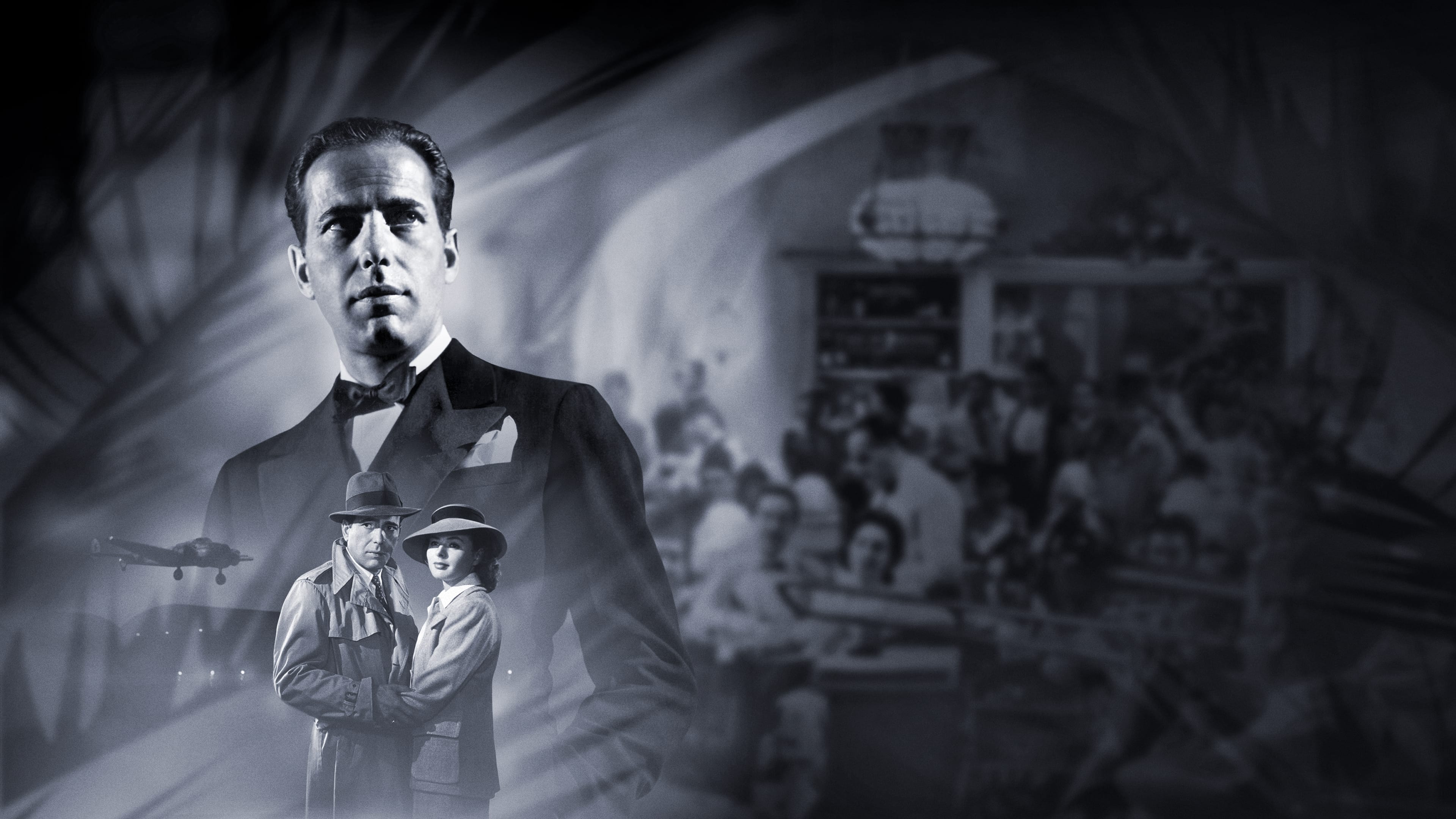





Casablanca(1943)
They had a date with fate in Casablanca!
Imdb
8.50
656K VotesTmdb
8.14
6.1K VotesViewings
No viewings yet. Add one to start tracking.
In Casablanca, Morocco in December 1941, a cynical American expatriate meets a former lover, with unforeseen complications.
Where to watch

Infos
Runtime
102 minutes
102 minutes
Directed by
Michael Curtiz
Michael Curtiz
People Interested
24
24
People Finished
60
60
Release Status
Finished
Finished
Release Date
1/15/1943
1/15/1943
Original Language
English
English
Origin Country
United States
Cast
Recommended Titles
Reviews
aleks-predator
2 months ago
6
Timeless Classic
"Casablanca" came out in 1942, yet it feels like it exists outside of time. This is not just an old Hollywood film — it belongs to the category of cultural landmarks. Michael Curtiz crafted a story where the war feels close and ever-present, never fading into the background. Against that backdrop stands Rick Blaine, the owner of a café in Moroccan Casablanca — a man with a past he prefers to keep to himself. The city presents itself as neutral ground, filled with people living out their own lives, fears, and hopes. And Rick, who pretends none of it concerns him.
What you remember most about the film is its actors. Humphrey Bogart plays Rick. He plays him in such a way that beneath the outward calm you sense an inner fracture. He almost never raises his voice or makes sharp gestures, yet everything is readable in his eyes. That's where the character's appeal lies — in his restraint. And when Ilsa Lund enters the picture, the tension becomes almost tangible. Their scenes work in a particular way: pauses, glances, and things left unsaid. It stays with you. Thanks to Ingrid Bergman's fine performance, Ilsa comes across as entirely organic — a role the actress undeniably pulled off. To this day I cannot understand why this duo didn't take the Oscars for Best Actor and Best Actress. Despite my reserved overall feelings about the film, I believe Bogart and Bergman both performed with distinction and could well have been the winners. Bogart at least received a nomination; Bergman wasn't even afforded that honor. A shame. She was nominated that year for "For Whom the Bell Tolls" — a different film was chosen to represent her.
The picture will inevitably raise many questions for its viewers: who should have done what in this story, where each person's place lies, how to navigate the pull between feeling and duty, and ultimately what follows from the choices made — above all, within the souls of the characters themselves. Under Curtiz's direction, the film leaves it to the audience to decide what is right and what is not.
For all its positive qualities, I should note that the film struck me as somewhat slow. I understand that my expectations played a part in that. I had heard so much unqualified praise for it that when I finally sat down to watch it myself, it seemed rather ordinary and not particularly remarkable. Yes, there is romance and drama in abundance, but "Casablanca" does lose momentum at times. I'm sure that quality can hardly be called a flaw — it's part of the film's unique atmosphere, designed to draw you deeper into the events and the inner lives of the characters. But as a modern viewer, I probably experienced it as a negative and found the pacing drawn out. The ending, however, proved to be entirely in keeping with the spirit of sentimental drama and holds you in suspense right up to the final frame.
In closing, the film stands as a vivid example of classical Hollywood cinema. The performances of Humphrey Bogart and Ingrid Bergman are impressive. The story is solid. "Casablanca" was and remains one of the significant works in the history of cinema and unquestionably deserves its recognition. Even if the film today seems fairly straightforward and even predictable — at least to me personally — it will always find its audience. After all, it is a classic.
6 out of 10