

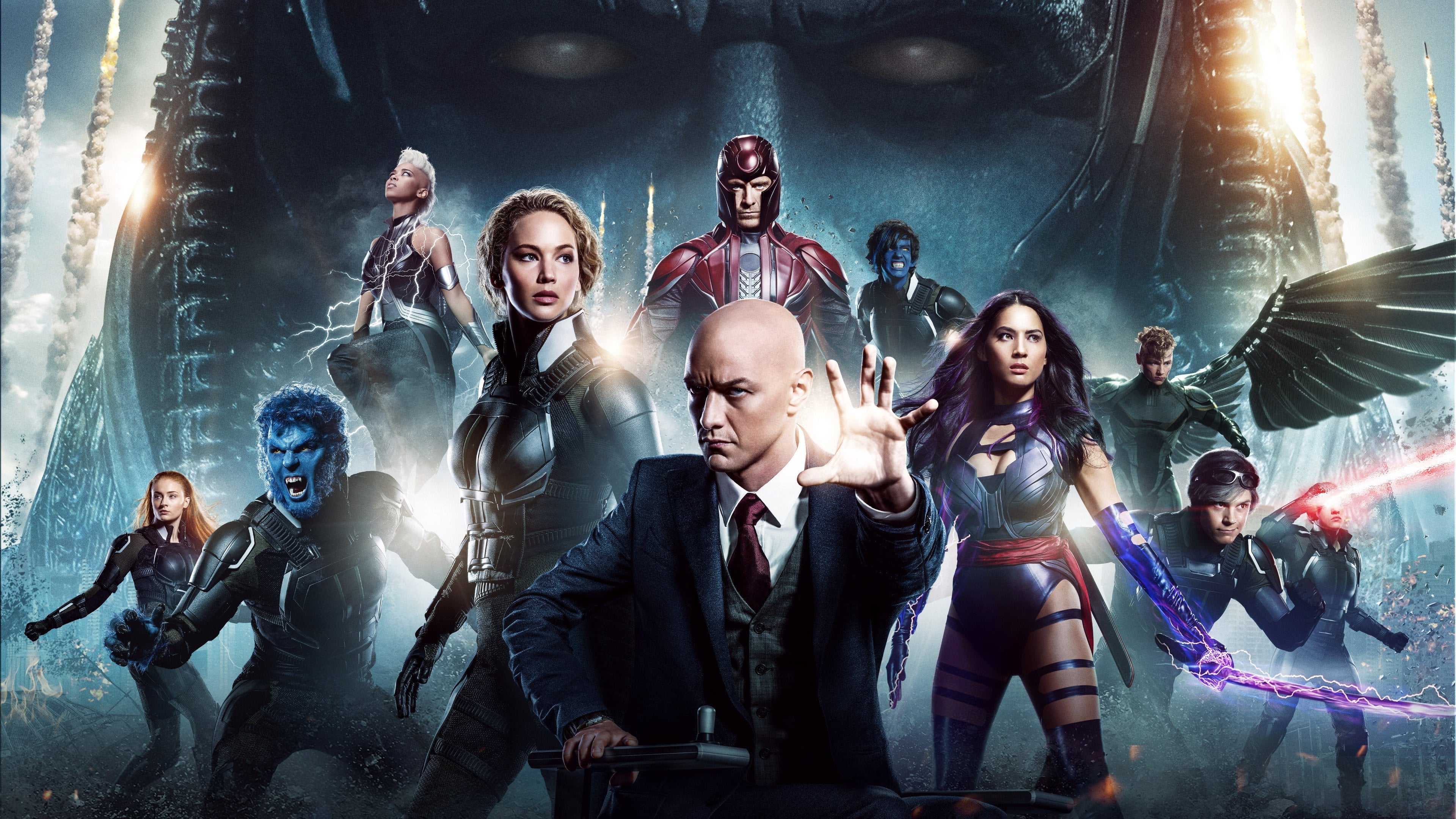









X-Men: Apocalypse(2016)
Only the strong will survive.
Imdb
6.80
501K VotesTmdb
6.53
14K VotesViewings
No viewings yet. Add one to start tracking.
After the re-emergence of the world's first mutant, world-destroyer Apocalypse, the X-Men must unite to defeat his extinction level plan.
Where to watch

Infos
Runtime
144 minutes
144 minutes
Directed by
Bryan Singer
Bryan Singer
Written by
Simon Kinberg
Simon Kinberg
People Interested
12
12
People Finished
285
285
Release Status
Finished
Finished
Release Date
5/18/2016
5/18/2016
Original Language
English
English
Origin Country
United States
Cast
Recommended Titles
Reviews
aleks-predator
about 1 year ago
7
Everything They Built Will Fall. And From the Ashes of Their World, We Will Build a Better One
"Days of Future Past"—beyond its beautiful title—gave audiences a high-quality project that, in my opinion, marked a global event and a kind of rewriting of this comic book universe’s history. Not new to the world of comics, of course, but still relatively fresh for cinema. Though not the first—just a few years earlier, the "Star Trek" franchise did the same with its 2009 reboot. That turned out strong. And Fox’s X-Men franchise managed to deliver an equally powerful punch with "Days of Future Past" in 2014. After that solid blockbuster, the studio aimed even higher with an updated universe of heroes—introducing one of the most powerful villains with an unforgettable name: "Apocalypse".
Back in the director’s chair was Bryan Singer, the man behind the first two original X-Men films as well as "Days of Future Past". His signature style and heavy-handed grandeur were already clear from the first trailer. The movie itself doesn’t lag behind and promises to be a landmark event in the mutant universe. Singer’s touch is easy to spot: the film is drenched in vivid colors and sweeping set pieces, leaning hard into global stakes and comic-book spectacle—something fans of his work will no doubt enjoy. On one hand, it’s grand, flashy, and impressive. On the other, this approach pushes character development into the background. Not erasing it completely (Magneto’s storyline here is proof of that), but shifting the focus more toward blockbuster spectacle than true drama. And in that balancing act—trying to be both big and dramatic—I, as a viewer, felt some dissonance. The film swings like a pendulum between drama, action, and even comedy, making the tonal shifts harder to follow. I suspect fans will be pleased with many of the film’s choices, while non–comic book readers might see these very things as flaws.
The cast is extensive. Once again, the film brings back beloved characters while also introducing a host of new ones. At the core are, of course, Charles Xavier and Erik Lehnsherr—Professor X and Magneto—destined for both friendship and rivalry, played by the now-familiar James McAvoy and Michael Fassbender. And the so-called “secondary” characters are hard to call secondary at all. With each new installment, their roles grow more significant for the universe as a whole. Worth mentioning are strong performances by Jennifer Lawrence, Nicholas Hoult, Rose Byrne, Sophie Turner, and Evan Peters.
The film’s villain is Apocalypse, played by Oscar Isaac. A colorful character, designed to be the ultimate foe—an embodiment of cosmic evil, a threat so great it seems nearly impossible to resist. His Four Horsemen were also meant to be something outrageous and deadly. The result, however, feels mixed. On one hand, the villains are dangerous and formidable; on the other, they lack charisma and their arcs feel unfinished. And then there’s Fassbender’s eternal dilemma, revisited yet again. Magneto once more finds himself torn between good and evil, battling his inner demons, rediscovering himself, only to fall back into the same patterns—haunted by memories and tempted by darkness. By the third time, this cycle starts to feel unconvincing: the same struggle, simply in new circumstances.
The first third—or even half—of the film intrigues and at times mesmerizes. The heroes and villains are introduced, the lines of conflict drawn, and even a hint of suspense is present. But by the finale, the clash between the two sides feels stretched out and ultimately too straightforward, lacking surprises or fresh twists. Such is Singer’s world. Not necessarily bad—just predictable.
"X-Men: Apocalypse" is undeniably a massive film. It’s visually stunning, packed with action and grandeur. Perhaps that’s the hallmark of this director’s work. The film isn’t without problems, but for those looking for a flashy blockbuster, it definitely delivers.
7 out of 10