







Metropolis(1927)
There can be no understanding between the hands and the brain unless the heart acts as mediator.
Imdb
8.20
202K VotesTmdb
8.10
3.1K VotesViewings
No viewings yet. Add one to start tracking.
In a futuristic city sharply divided between the rich and the poor, the son of the city's mastermind meets a prophet who predicts the coming of a savior to mediate their differences.
Where to watch

Infos
Runtime
148 minutes
148 minutes
Directed by
Fritz Lang
Fritz Lang
Written by
Thea von HarbouFritz Lang
Thea von HarbouFritz Lang
People Interested
24
24
People Finished
43
43
Release Status
Finished
Finished
Release Date
1/10/1927
1/10/1927
Original Language
German
German
Origin Country
Germany
Cast
Related Titles
Recommended Titles
Reviews
aleks-predator
3 months ago
6
“The mediator between the head and the hands must be the heart.”
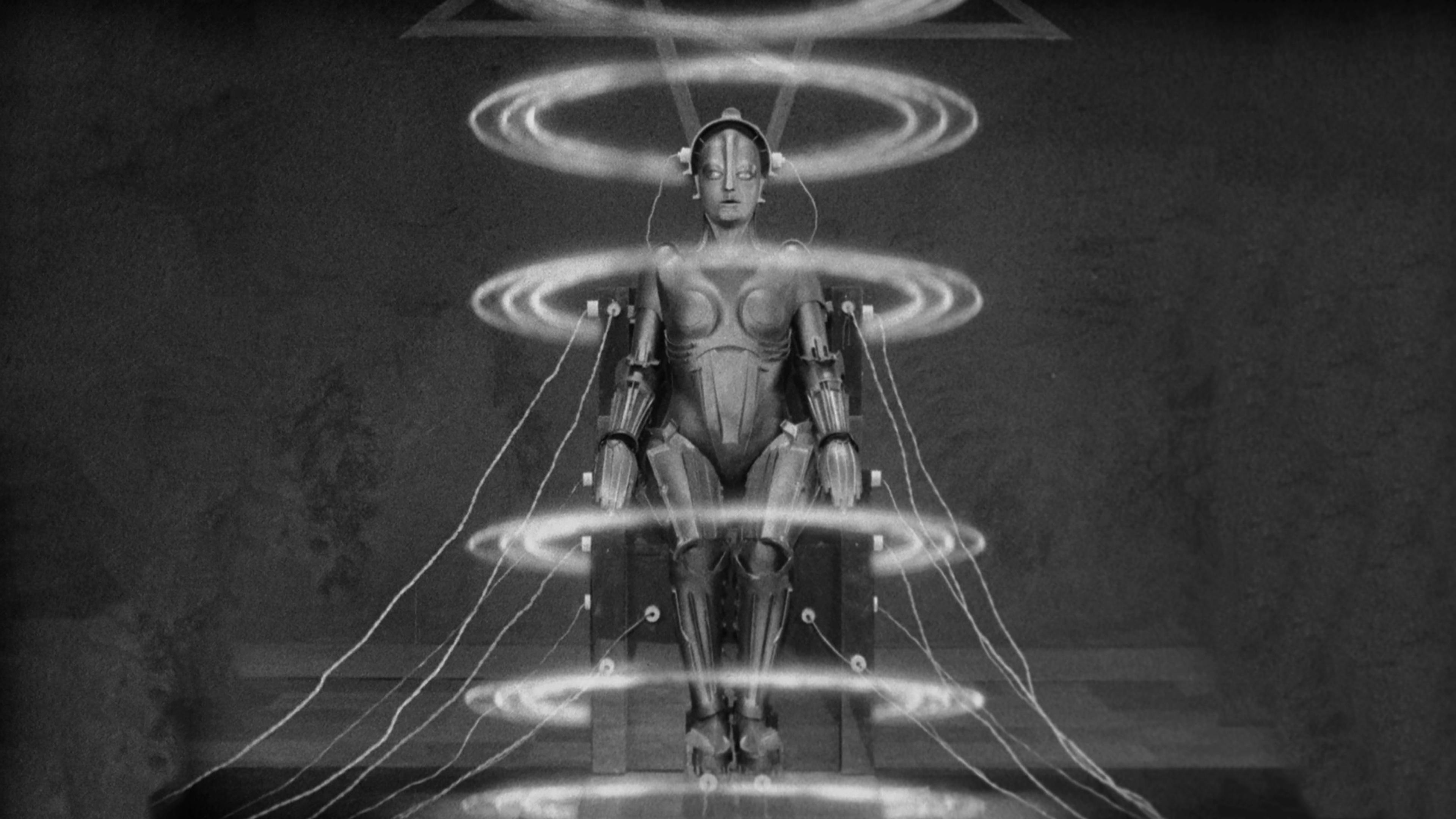
"Metropolis" is a German film by Fritz Lang, a work that first appeared almost a century ago. This project is undoubtedly an ambitious creation, rightfully considered one of the greatest examples of silent cinema. The film attempts to tell a complex story set in a futuristic world where a kind of heaven and hell exist side by side—where some people live rich and carefree lives, while others are stripped of their rights and struggle simply to survive. And, as in many similar stories in cinema and literature, the world does not remain the same. It changes—and it changes forever.
The film is memorable first and foremost for its scale. Today, in an era of computer technology and incredible special effects, it’s difficult to impress modern audiences with a visually spectacular image. Successful visual effects are no longer the goal in themselves but rather a storytelling tool. Yet when you look at the majestic structures of "Metropolis", its carefully composed shots that almost border on the unreal, you constantly wonder how the creators managed to achieve such striking visual realism in those distant years.
But perhaps that’s the only aspect of the project that truly impressed me. In other respects, the film felt rather ordinary and incredibly drawn out. The original version runs for almost two and a half hours. And although I call it the “original,” it’s worth noting that it only became known in this form after the Berlin International Film Festival in 2010, where a discovered and restored version was shown. That copy had been found in Buenos Aires in 2008. Before that, the world had known a version nearly half as long. The “short” cut was assembled back in 1927 and screened for decades. I can’t shake the feeling that perhaps there was a reason the film had been shortened. It’s entirely possible that the most essential parts had already been kept. The “original” 2.5-hour version felt extremely long to me.
The acting also raises some doubts. I understand that this was the era of silent cinema, where characters’ emotions were conveyed through facial expressions and body language. Still, I’ve seen many films from that period where the acting felt far more convincing and the characters more believable. In "Metropolis", the exaggerated gestures and obvious overacting don’t really work in the film’s favor.
No matter how you look at it, "Metropolis" remains an important milestone in the development of world cinema. In terms of visual scale, the project clearly ran ahead of its time. The enormous city of the future imagined by the filmmakers—with its towering structures of concrete and steel rising above the world itself, gigantic machines sustaining the life of its population, and two very different societies existing under completely different conditions—is very much a product of its era. Yet the ideas presented still feel relevant, even a hundred years later. Viewers can easily find something that resonates with them, because the social problems of society never truly disappear—they simply transform. And it’s important not to forget the simple idea expressed by the characters in the film: “The mediator between the head and the hands must be the heart.” It’s a perspective that certainly has a right to exist.
6 out of 10