

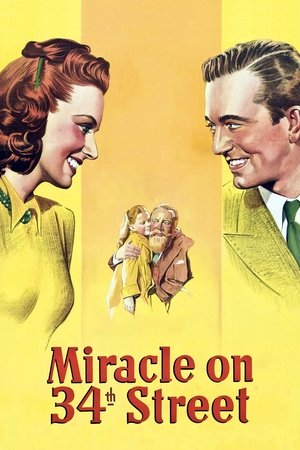







Miracle on 34th Street(1947)
Capture the spirit of Christmas with this timeless classic!
Imdb
7.90
60K VotesTmdb
7.36
843 VotesViewings
No viewings yet. Add one to start tracking.
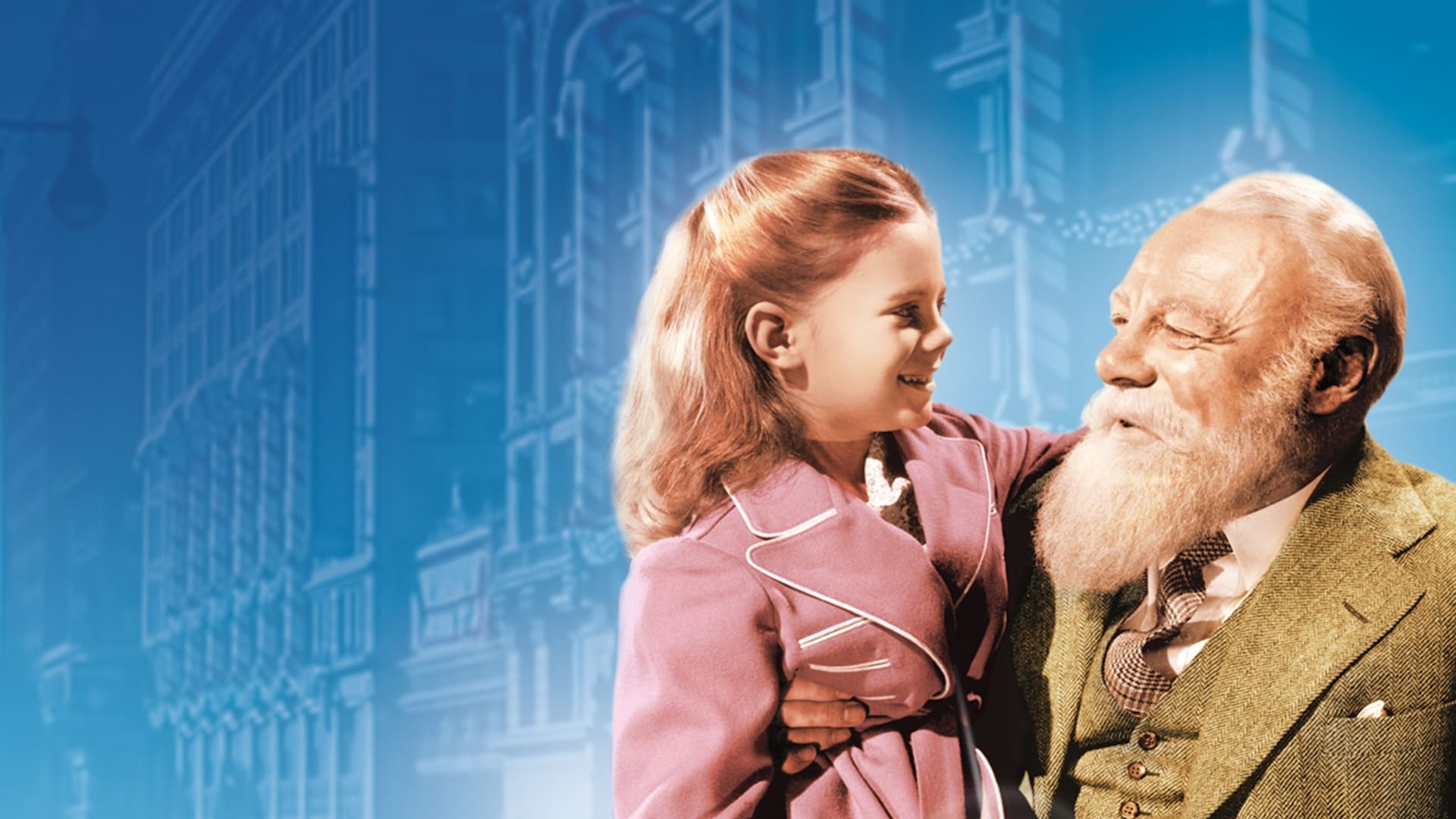
Kris Kringle, seemingly the embodiment of Santa Claus, is asked to portray the jolly old fellow at Macy's following his performance in the Thanksgiving Day parade. His portrayal is so complete that many begin to question if he truly is Santa Claus, while others question his sanity.
Where to watch

Infos
Runtime
96 minutes
96 minutes
Directed by
George Seaton
George Seaton
Written by
George Seaton
George Seaton
People Interested
4
4
People Finished
24
24
Release Status
Finished
Finished
Release Date
6/4/1947
6/4/1947
Original Language
English
English
Origin Country
United States
Cast
Recommended Titles
Reviews
aleks-predator
about 1 month ago
7
The Faith That Holds Us Together
I watched "Miracle on 34th Street" (1947) not too long ago, yet it has stayed with me ever since. On the surface, it's a simple Christmas story—almost a fairy tale—but beneath it lies something much greater. Something that hasn't lost its relevance over the years. Perhaps, if anything, it's even more relevant today.
An elderly man named Kris Kringle appears in the New York City Thanksgiving parade and claims that he is the real Santa Claus. At first, you expect a lighthearted comedy filled with childlike innocence. But the story quickly becomes much more interesting. Kris turns out to be remarkably convincing. He's hired to work at Macy's, where his kindness, sincerity, and generosity begin to change the people around him. Before long, the story leads to a courtroom trial centered on a strange, almost childlike, yet surprisingly profound question: Can someone truly be Santa Claus if he genuinely believes he is?
The film gradually reveals itself to be far more serious than it initially appears. It's about faith—not necessarily faith in miracles themselves, but faith that goodness, honesty, and compassion still have a place in the world. The year is 1947. People are still recovering from the devastation of World War II, and they desperately need something to believe in. It doesn't have to be Santa Claus. Sometimes it's enough to believe that genuine kindness and truly good people still exist.
The film also portrays skepticism remarkably well. Many of its characters are harsh, impatient, and quick-tempered. They're not evil—they're simply exhausted, hurt by life, and reluctant to trust again. That's precisely why their gradual transformation feels so meaningful. This is especially true of Maureen O'Hara's character. At first, she dismisses everything as childish fantasy, yet she can't shake the feeling that there's something extraordinary about Kris.
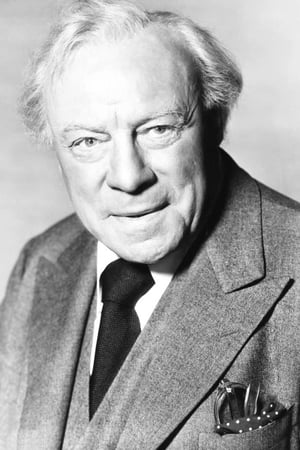
Edmund Gwenn delivers a wonderful performance as Kris Kringle. His acting is gentle, understated, almost invisible—and yet it carries the entire film. His Kris is not a cartoonish old man with a sack full of presents. He's calm, wise, and deeply human. He doesn't merely believe himself; he inspires others to believe as well. His Academy Award for the role was thoroughly deserved. John Payne is equally solid, and the supporting cast adds depth and authenticity, making the world feel natural and believable. It's also a pleasure to watch a very young Natalie Wood, whose performance is surprisingly impressive. Her character is wonderfully expressive, and even at such a young age, you can already see the talent that would later make her a celebrated actress.
The film won three Academy Awards and was nominated for Best Picture. The competition that year was fierce, and it didn't take home the top prize, but that doesn't diminish its importance. By the time the credits rolled, I found myself thinking that, yes, the film is undeniably naive in many of its solutions—but it's also incredibly warm.
"Miracle on 34th Street" is a charming, memorable, and genuinely enjoyable film. It's about how easily we can lose our faith—and how important it is to find it again. Most of all, it's about the idea that the greatest miracles happen when people simply choose to believe in one another.
7 out of 10